Buying land near Bellville can feel exciting right up until the questions start piling up. Can you actually build on it, does it have legal access, and are utilities nearby or just advertised as "available"? If you want to avoid surprises, a little due diligence up front can save you time, money, and stress later. Here’s what you should check before you buy, especially if you’re looking at small acreage or rural property near Bellville. Let’s dive in.
Start With Location Rules
One of the first things you should confirm is whether the property sits inside Bellville city limits or in unincorporated Austin County. That line matters because services, permits, and land-use rules can change quickly depending on where the parcel falls.
Inside the city, Bellville maintains zoning and building permit resources and owns electric, gas, water, wastewater, and sanitation services. Outside the city, Austin County processes are more likely to control questions about development permits, septic, floodplain issues, driveway access, and related site work.
Confirm Boundaries and Legal Access
A current survey is one of the most important items to review when buying land near Bellville. It helps confirm the property boundaries, acreage, legal access, encroachments, and any rights-of-way that could affect how you use the land.
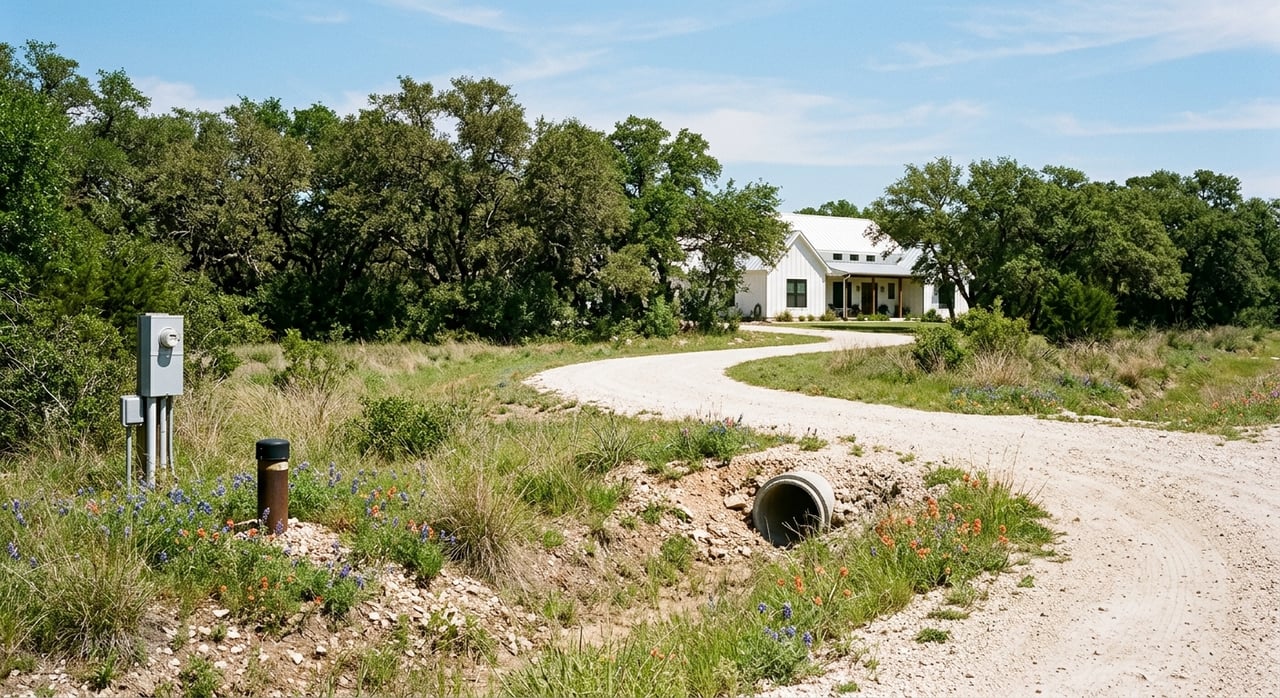
Access matters just as much as size. A parcel may look great on paper, but if the driveway location, culvert permit, or road frontage creates problems, that can change the value and usability of the land quickly.
Austin County’s permit guidance includes development permits, driveway culvert permits, private road naming, 911 addressing, and subdivision and floodplain forms. If the parcel fronts a state highway or FM road, the county says you may also need to coordinate with TxDOT.
Review What Actually Conveys
Do not assume every right tied to the property transfers with the sale. Texas A&M AgriLife notes that mineral rights, groundwater rights, and wind rights may have been reserved or severed.
You should also review deed restrictions, easements, liens, leases, and property tax status early in the process. These records can affect how you use the property and what obligations come with it.
Check Utilities Before You Assume It’s Buildable
A beautiful piece of land is not automatically ready for a home, barn, or other improvements. Before you move forward, verify which utilities are actually available to the property and whether they fit your intended use.
Within Bellville city limits, the city owns electrical distribution, gas distribution, water, wastewater, and sanitation services. New service requires a utility application and deposit.
For parcels outside the city, you should confirm whether water will come from a rural water provider or a private well. Austin County Water Supply Corporation is based in Bellville, and Bluebonnet Groundwater Conservation District serves Austin County and regulates groundwater in the county.
Septic Needs Early Attention
If the property will need a septic system, treat that as a major due diligence item. The Texas Commission on Environmental Quality says onsite sewage facilities, including septic systems, require a permit and approved plan and should be designed from a site evaluation.
Austin County’s permit guide says a development permit must come first, and OSSF paperwork should be submitted about 3 to 4 weeks before installation. On smaller acreage, this step can be especially important because soil and site conditions may limit where a system can go.
Review Floodplain and Drainage Conditions
Floodplain review matters even when a property does not appear wet at first glance. The official source for National Flood Insurance Program flood maps is FEMA’s Map Service Center, and flood-hazard areas can affect what you build and what permits you need.
Austin County’s permit guidance says an elevation certificate is required before a development permit will be issued in a flood-hazard area. That means floodplain status is not just a map issue. It can directly affect your timeline and project costs.
The current TREC Farm and Ranch Contract also allows a buyer to object if the property lies in a special flood-hazard area shown on the current FEMA map. That makes floodplain review an important part of your contract due diligence, not just a future building concern.
Research Zoning and Local Land-Use Rules
Many rural Texas properties are not zoned, but that does not mean there are no rules. You should still confirm whether municipal or county requirements apply to the parcel you’re considering.
If the property is inside Bellville city limits, check the city’s zoning map resource. If it is outside the city, county processes and other local regulations may still affect development, access, drainage, or related land use questions.
Texas A&M AgriLife also notes that county stock laws and open-range or closed-range rules can affect landowner responsibilities and liability. If you plan to use the property for agricultural or rural purposes, that is worth checking early.
Verify Tax Valuation History
The listed price is only part of the cost of owning land. You should also review the property’s valuation history to understand whether agricultural, open-space, or wildlife valuation may be in place.
Texas A&M AgriLife recommends checking acreage requirements, intensity of use, and possible rollback taxes if the use changes. Austin County Appraisal District says AG and homestead applications take 4 to 6 weeks to process, so it helps to understand timing and requirements ahead of closing.
If you are buying land for future homesite use, recreation, or a small agricultural setup, this step can affect your carrying costs more than you expect. It is better to know the current tax treatment before you commit.
Check Deed Records Early
Do not wait until the last minute to review local records. The Austin County Clerk provides deed-record copies and accepts e-recording, but the clerk also states that the office cannot give legal advice or search public records for you.
That means you should plan on getting help from the right professionals as needed. Reviewing deed records early can help uncover recorded easements, prior reservations, and other issues that may impact value or future plans.
Understand the Texas Contract Timeline
Rural land purchases in Texas often move faster than buyers expect. After a contract is signed, the timeline usually shifts quickly into earnest money, option-period inspections, title review, and survey review.
Under the current TREC Farm and Ranch Contract, the buyer must deliver earnest money and the option fee within 3 days after the effective date unless the contract states otherwise. TREC also says earnest money must be deposited by the close of business of the second working day after execution unless the parties agree in writing to a different time.
Know How the Option Period Works
The option period is negotiable, and it gives you time to inspect the property and evaluate whether you want to move forward. TREC notes that contract days are counted as calendar days starting the day after the effective date.
There is no automatic three-day cooling-off period after a contract is accepted. If you want termination rights, they need to come from the contract itself.
Expect Title and Survey Review Early
Under the current Farm and Ranch Contract, the title company’s commitment and exception documents are generally due within 20 days after the title company receives the contract. The survey provisions also give the parties options for using an existing survey, ordering a new one, or proceeding without one.
The form allows buyers to object to title defects, survey issues, flood-hazard areas, and certain exceptions before closing. That is why early review matters so much when you are buying land.
Focus on the Most Useful Inspections
For Bellville-area acreage, the most useful inspections are often practical and site-specific. In many cases, the strongest due diligence plan includes:
- A current survey
- Title review
- Septic or site evaluation
- Floodplain review
- Well or water-supply review
- An in-person look at roads, fencing, gates, and drainage
Texas A&M AgriLife flags several common red flags for rural buyers, including legal access issues, missing surveys, undisclosed easements, limited water information, deferred infrastructure maintenance, and pressure to waive inspections. If something feels rushed or vague, it is usually worth slowing down.
Build the Right Local Team
Buying land does not have to turn into a legal research project, but it does require the right support. For many buyers, the most helpful professionals are a buyer’s agent familiar with rural property, a title company, a surveyor, a septic professional, and a local inspector or contractor who can walk the site with you.
That team can help you sort through paperwork, timing, and property-specific questions before they become expensive problems. In a market like Bellville, local knowledge matters because rural land details are often what make or break a deal.
If you’re looking at land near Bellville, I believe the smartest approach is to slow down, verify the basics, and ask better questions before you buy. A great parcel is about more than acreage. It’s about access, utilities, records, permits, and whether the property truly fits your plans. If you want a local partner to help you walk through those details, reach out to Lauren M. Cox.
FAQs
What should you check first when buying land near Bellville?
- First, confirm whether the property is inside Bellville city limits or in unincorporated Austin County, because permits, utilities, and land-use processes can differ depending on location.
Why is a survey important for Bellville-area land?
- A current survey helps verify boundaries, acreage, legal access, encroachments, and rights-of-way, which are all key issues for rural and small-acreage property.
How do you know if utilities are available to land near Bellville?
- You should verify utility availability directly based on the parcel location, since city properties may have Bellville utility services while rural parcels may depend on other providers, wells, or septic systems.
Do you need a septic permit for rural land near Bellville?
- Yes, if the property will use an onsite sewage facility, TCEQ says it requires a permit and approved plan, and Austin County says the development permit comes first.
Why does floodplain status matter when buying land near Bellville?
- Floodplain status can affect development permits, require an elevation certificate in flood-hazard areas, and create contract concerns if the property lies in a special flood-hazard area.
What contract is commonly used for rural land in Texas?
- TREC’s Farm and Ranch Contract is the main Texas form used for many rural properties with metes-and-bounds descriptions from a survey.
How long do you have to inspect land under a Texas contract?
- The option period is negotiable, and contract days are counted as calendar days starting the day after the effective date, so it is important to understand your timeline before signing.
What records should you review before buying land in Austin County?
- You should review deed records, easements, liens, leases, restrictions, tax status, and valuation history as early as possible in your due diligence process.