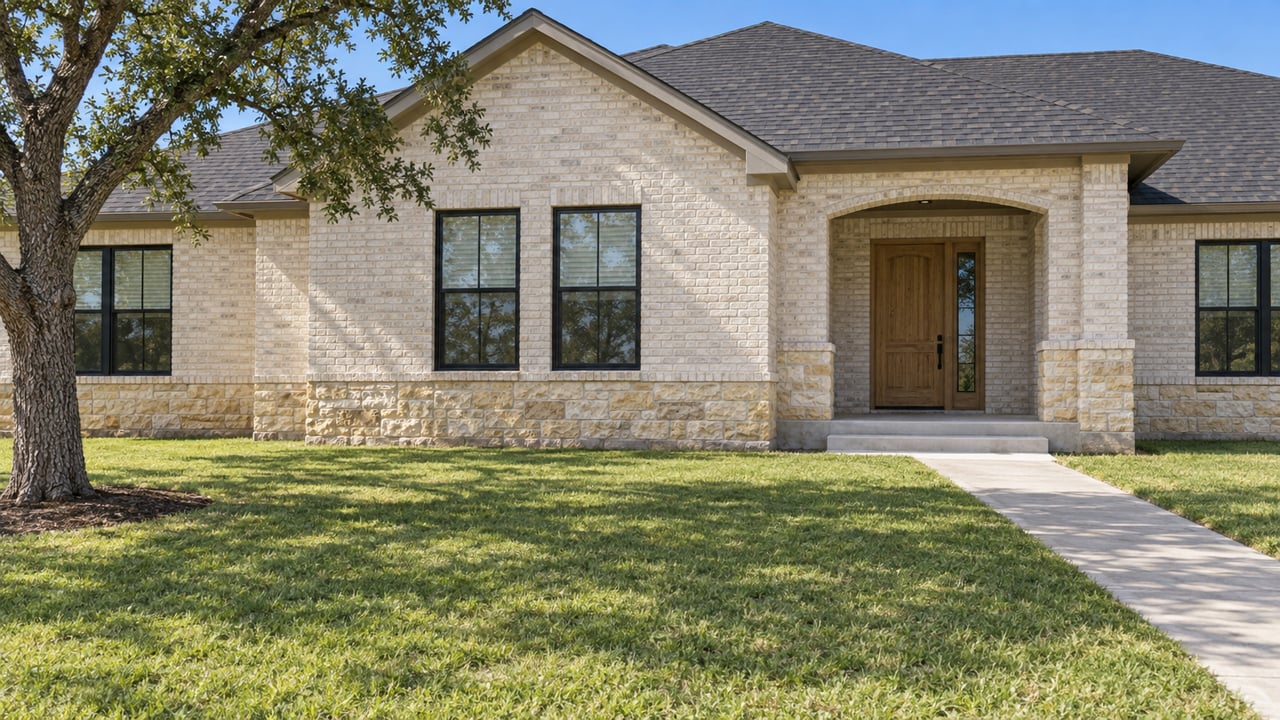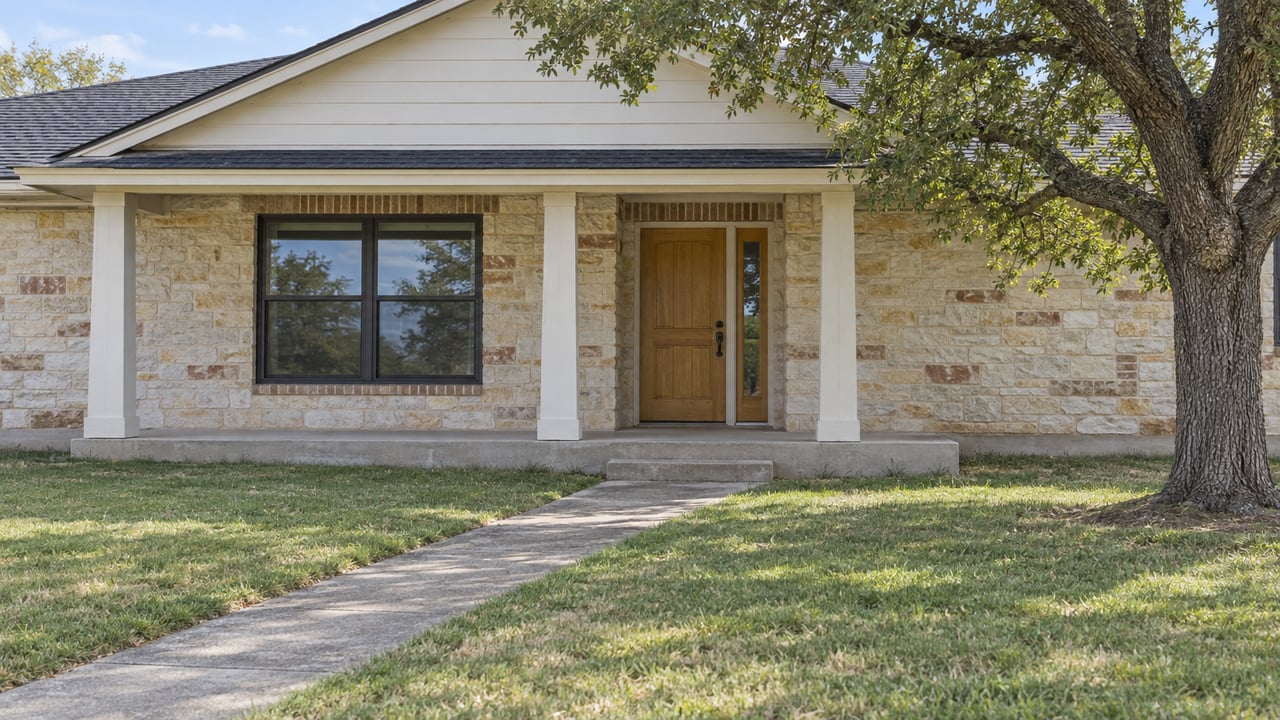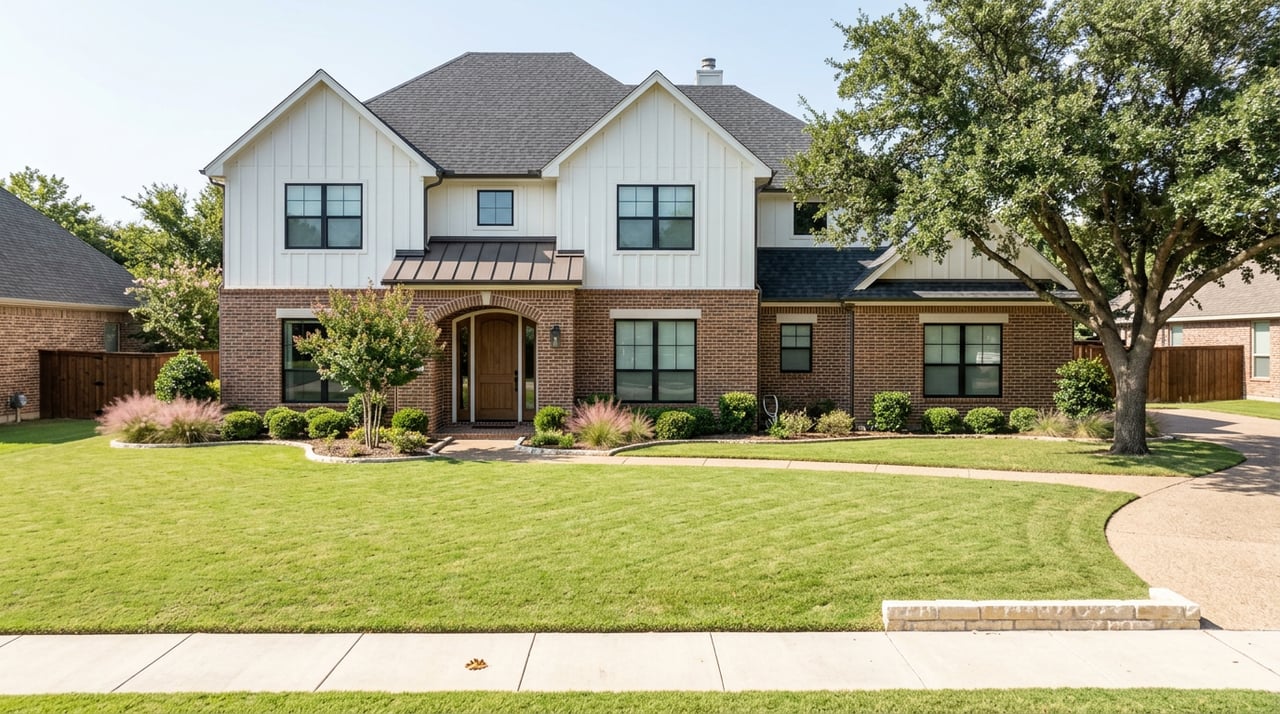
As The Real Deal reported, D.R. Horton's executive chairman David Auld said on an earnings call last fall, "We expect our sales incentives to remain elevated in fiscal 2026." That line was meant for investors, not for the couple in Brenham wondering why their three-bedroom on the west side has had two price cuts and still no offer.
But it explains their situation better than anything on the comparable sales sheet.
I've sat across the table from sellers this year who did everything right. Priced at a fair number based on recent closings. Cleaned up the yard. Took good photos. And the house still sat for two, three months longer than it would have a year ago. The instinct is to blame the price, drop it again, and hope. Sometimes that's the right call. But increasingly in Brenham, the real competition for that listing isn't another resale house across town. It's a brand-new one-story going up off Highway 36, with a builder covering the buyer's closing costs and buying down their interest rate for the first two years of the loan.
The Numbers Don't Agree, But They Agree on the Direction
Pull three different market trackers for Brenham right now and you'll get three different pictures. One puts the median sale price at $288,000 as of May 2026, down close to 14 percent year over year, with homes spending a median of 111 days on the market, more than double what they did a year earlier. Another shows June 2026 list prices closer to $326,000, with homes moving in about 91 days versus 75 days the year before. A third shows fewer homes selling in a given month than the year prior, while a different source shows more.
None of that is a data error so much as a reminder that "the market" isn't one number. Different trackers pull from different windows, count listings differently, and treat pendings differently. What every one of them agrees on, though, is the direction: homes in Brenham are taking meaningfully longer to sell than they did in 2025, and price reductions have become common rather than rare. As of May 2026, roughly a quarter of active Brenham listings had already taken at least one price cut.
That much is visible from the portal. The financing comparison is less obvious.
How Builder Financing Incentives Compare
Statewide, the Texas Real Estate Research Center at Texas A&M has been tracking something that matters more to a Brenham seller than the local days-on-market number. Before the pandemic, a new-construction home in Texas typically cost nearly $100,000 more than a comparable resale, sometimes a 40 to 60 percent premium. That gap has been closing for years, and by March 2026 it had shrunk to an all-time low of about $15,000, down from $19,900 a year earlier. New builds carried a median price of $341,500 statewide against $326,200 for existing homes.
A shrinking price gap sounds like good news for resale sellers. But it doesn't capture the full financing comparison: builders may also offer financing incentives rather than reduce the advertised price. A temporary 2-1 buydown drops a buyer's rate by two points in year one and one point in year two before it resets. A permanent buydown, paid for with builder-funded discount points, lowers the rate for the life of the loan. Either way, the builder eats the cost, not the list price, while the buyer's actual monthly payment looks like it belongs to a much cheaper house.
Production builders like D.R. Horton may offer financing incentives. A private seller in an existing neighborhood can offer a seller-paid buydown of their own.
Two Specific Streets Doing This in Brenham Right Now
This isn't an abstract statewide trend playing out somewhere else. It's happening inside Brenham city limits, at two active D.R. Horton communities.
Liberty Village sits off State Highway 36 North at West Blue Bell Road, platted for 321 single-family homes across several floor plans ranging from about 1,370 to 2,164 square feet, priced roughly in the high $260,000s to low $330,000s. Wilkins Valley sits off US Highway 290 West near South Saeger Street, with smaller floor plans between about 1,280 and 1,892 square feet priced from the high $230,000s into the mid $270,000s. Earlier this year, one new-construction marketplace pegged the combined incentive stack available on a Wilkins Valley purchase, rate buydown and closing cost credit together, at close to $18,500.
Neither of those communities is competing on curb appeal with a 1990s three-bedroom on a quarter acre near downtown. They're competing on what the buyer's lender prints out at the bottom of a loan estimate. A resale house priced $10,000 below a Liberty Village floor plan can still lose the buyer if the builder's temporary buydown makes the new home's year-one payment lower anyway.
Here's roughly how that math plays out on a $290,000 loan at a 6.5 percent note rate, comparing a builder's 2-1 buydown against a resale purchase with no rate assistance:
| Resale, no buydown | New construction, 2-1 buydown | |
|---|---|---|
| Note rate | 6.5% | 6.5% |
| Year 1 effective rate | 6.5% | 4.5% |
| Approx. year 1 monthly payment (P&I) | $1,833 | $1,470 |
| Who pays for the difference | Nobody, buyer absorbs the full rate | Builder, funded at closing |
That roughly $360 monthly gap in year one is the reason a buyer will drive past a fairly priced resale house and choose new construction instead, even when the two homes list for nearly the same price.
What This Means If You're Selling
If your Brenham listing has already had a price cut and still hasn't moved, the fix probably isn't another price cut. It's understanding what the buyer touring your house saw an hour earlier at Liberty Village or Wilkins Valley, and matching the offer where it actually counts: the effective monthly payment, not the sticker price. A seller-funded temporary rate buydown, negotiated through your buyer's lender at closing, can be less expensive than a second price reduction and speaks directly to the number a buyer is actually comparing.
It also means your pricing strategy should account for what a comparable new-build payment looks like this month, not just what the house down the street sold for last spring. Statewide, builders' own incentive costs run in the neighborhood of the price gap TRERC tracks, and that's a moving target tied to fiscal quarters. Production builders tend to sharpen incentives hardest at the end of a fiscal quarter, which for a company like D.R. Horton lands around December and June.
What This Means If You're Buying
Don't compare sticker prices between a resale house and a new build in Brenham without asking what the effective payment looks like on each. Ask the builder's sales office exactly what the buydown costs and when it expires. Ask a resale seller's agent whether a seller-paid buydown is on the table even if it isn't advertised. The Texas market right now sits close to balanced supply statewide, and Brenham's inventory has been loosening too, which gives a buyer real room to ask for either a lower price or a funded rate reduction on the resale side, not just at the builder's sales trailer.
A Few Questions Worth Asking Before You List or Offer
Does this mean resale homes in Brenham are overpriced? Not necessarily. It means the comparison a buyer is running in their head now includes a builder-subsidized payment, not just another resale asking price. A fairly priced resale house can still lose to a worse house with a better financed offer.
Can a resale seller actually offer a rate buydown? Yes. A seller-funded temporary buydown is a standard addendum most lenders can process. The seller doesn't need an in-house mortgage arm to fund one, just a willingness to put closing-table dollars toward the buyer's rate instead of the price.
Is this specific to Brenham, or is it happening everywhere in Texas? The statewide price gap TRERC tracks is a Texas-wide trend, but Brenham's swing in days on market has been sharper than the state's overall pace. Statewide, homes sold in June 2026 averaged 62 days on market versus 60 days a year earlier, a small shift. Brenham's local numbers have moved by a much wider margin over the same stretch, which points to something intensifying the statewide trend locally: two active production-builder communities inside city limits, both leaning hard on financing incentives to move inventory.
If you're trying to figure out what your Brenham house is actually worth to compete against that kind of offer, or you want a straight read on what a Liberty Village or Wilkins Valley floor plan means for your own comps, I'd rather walk through the real numbers with you than let a portal's algorithm guess. Reach out to Landmark Properties and get your free home valuation, and let's figure out what will actually move your listing this season.
This article is general information, not legal, tax or financial advice. Consult a qualified professional about your situation.