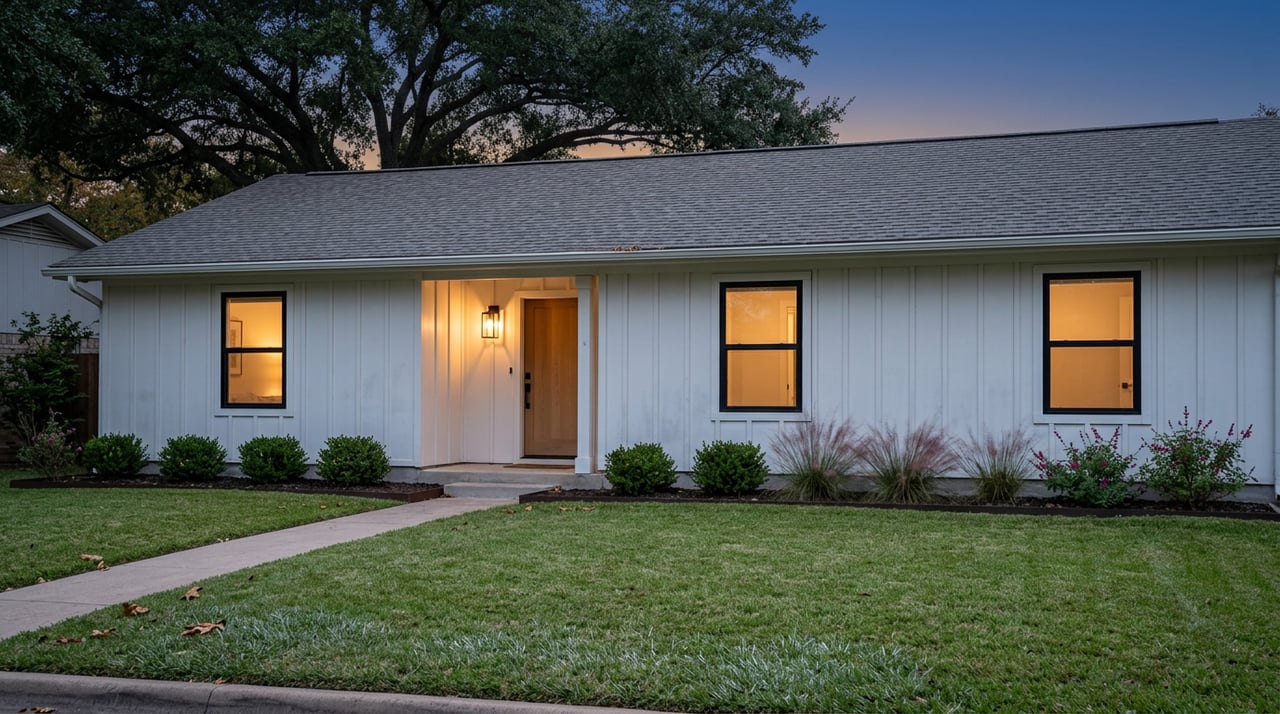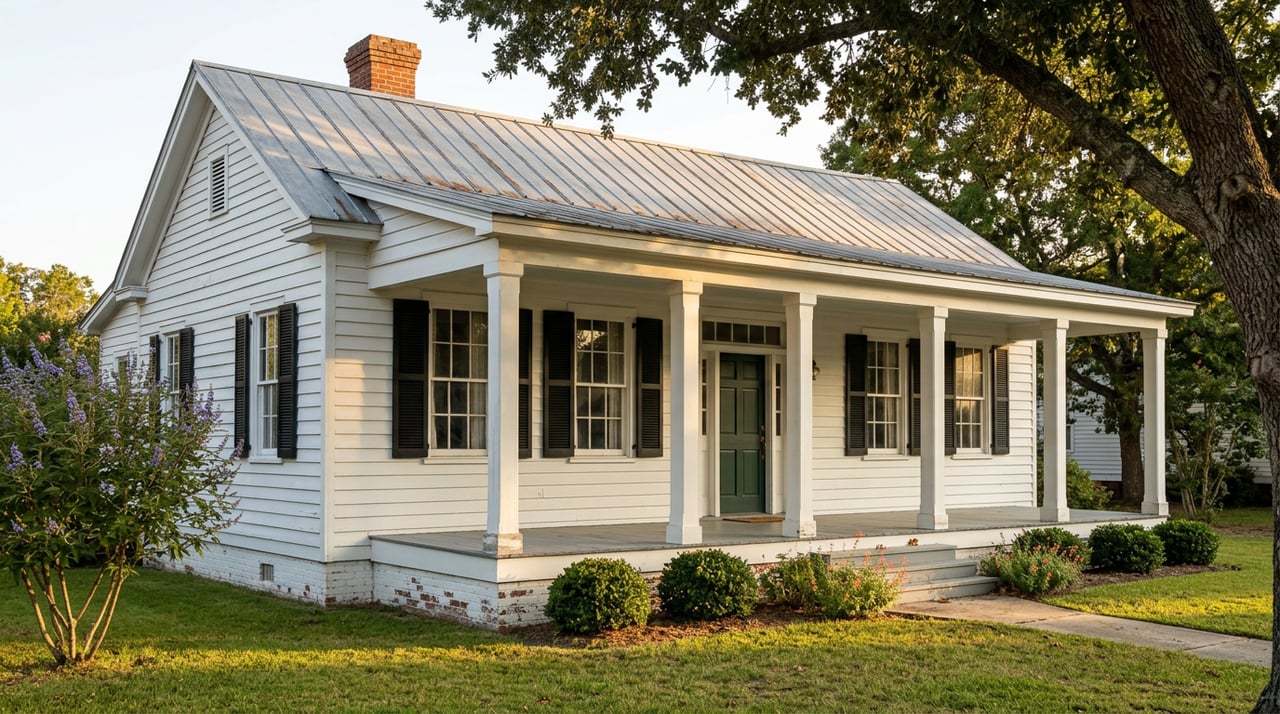
Say the word "historic" to a buyer looking at a Main Street house in Chappell Hill and most people brace for a maze of permission slips. They picture a design review board, a stack of forms, maybe a neighbor who reports paint colors to the county. The truth is thinner than that, and it lives in a different place than most buyers expect.
The restriction that actually has teeth in Chappell Hill isn't the one buyers usually worry about. It isn't attached to the plaque they can see from the sidewalk. It's attached to a specific state designation that looks almost identical to the one that carries no restriction at all.
Two Kinds of Old
Chappell Hill earned its reputation the slow way. A 1985 multiple property documentation called "Historic Resources of Chappell Hill" put a historic district and eight individual buildings on the National Register of Historic Places, including the Felder House, the Rogers House, the Routt House, and the Chappell Hill Public School and Female College Bell. Add the Main Street Historic District and the earlier-listed Stagecoach Inn, and the town carries ten National Register entries built between roughly 1850 and 1930, plus more than 25 Texas Historical Commission markers scattered from Main Street out to the rural roads leading to cemeteries and former plantations.
That's a genuinely dense concentration of recognized history for a town this size. It's also, on its own, not much of a legal fence. A National Register listing is a federal recognition program. According to Preservation Texas, federal designation provides no regulatory oversight of historic places, while state designation provides a range running from limited to strong. The National Park Service, which oversees the Register, has no role in deciding what a private owner does to their own house.
So the marker that sounds the most official, the one on the National Register, is the one that changes nothing about your renovation plans. The restriction is somewhere else.
The Comparison Nobody Puts in Front of You
Here's what each designation actually does for a private owner in Chappell Hill.
| Designation | Who reviews exterior changes | Advance notice required | Can be revoked | Present in Chappell Hill |
|---|---|---|---|---|
| National Register of Historic Places | No one, for private owners | None | Not applicable to private owners | Yes, district plus ten individual listings |
| Recorded Texas Historic Landmark (RTHL) | Texas Historical Commission | 60 days before altering exterior or historic integrity | Yes, for unsympathetic changes | Yes, many of the town's THC markers carry this designation |
| Local historic district ordinance | A city historic preservation commission | Varies by city | Varies by city | No, Chappell Hill has none |
Only the middle row binds an owner directly. And only the middle row matters for someone deciding whether to buy a marked property and then reroof it, re-side it, or add a porch.
Why There's No Fourth Layer
In a city with its own historic district ordinance, a buyer would be looking at three layers of review stacked on top of each other: federal recognition, state designation, and a local commission with its own design guidelines and its own meeting schedule. Chappell Hill only has two of the three, because it has no local government to write the third.
Chappell Hill disincorporated in 1884 and has been governed since by the Washington County Commissioners Court rather than a city council. Voters twice declined to bring city government back, in 1984 and again in 2008. That absence isn't a gap in coverage. It's the reason a Chappell Hill property owner never has to sit across a table from a local historic preservation commission the way an owner in a fully incorporated Texas town might. Whatever oversight exists here comes from the state, full stop.
For a buyer weighing a marked property against an unmarked one three miles down the road, that's the practical difference: no local design review meeting to attend, no local ordinance to read alongside the state rules. Just the RTHL notice requirement, if the property carries that specific designation.
What an RTHL Marker Actually Forecloses
The 60-day rule is specific and worth quoting directly. Preservation Texas describes it plainly: an RTHL's integrity "shall not be altered without notifying the Texas Historical Commission at least 60 days in advance." That's the entire mechanism. Not a veto, a notification window that gives the commission time to weigh in before work starts.
Two details matter more in practice than the notice window itself. First, a property can't become an RTHL in the first place if its historic features are already covered by non-historic materials such as vinyl siding, or if the building has been relocated within the last 50 years, so a fixer-upper that's already been resided won't qualify for the designation no matter how old it is. Once a building does carry RTHL status, the Historical Commission has said plainly that unsympathetic changes to it can result in the designation and its marker being removed. Second, interiors are largely untouched by any of this. Interior changes only trigger review if they affect the exterior appearance or the structural integrity of the building, which means kitchens, bathrooms, and floor plans inside an RTHL house are the owner's business the way they would be in any other home.
One more detail should lower the temperature for a nervous buyer: a property doesn't become an RTHL without its owner's consent. The nomination has to be submitted through the local county historical commission, and the current owner has to agree to it. Nobody buys a Chappell Hill house and wakes up with a new designation attached against their will.
The Tax Credit Most Buyers Never Ask About
Here's the part of the story that rarely comes up when a historic Chappell Hill listing gets shown. If a buyer plans to put the property to income-producing use, as a long-term rental, a short-term stay, or a small commercial space, a National Register listing or RTHL designation stops being a constraint and starts being a financing tool.
The Texas Historic Preservation Tax Credit Program offers a 25 percent state tax credit for rehabilitation of historic, income-producing or non-profit-use buildings, and it can be paired with the federal government's 20 percent credit for the same category of work. Roughly half of all state-credit projects apply for both, which stacks to 45 percent of qualified rehabilitation costs between the two programs. Zoning doesn't gate eligibility either. The Historical Commission's own guidance is direct on this point: what matters is the property's use and whether it carries the right state or federal historic listing, not how the parcel is zoned.
The catch is the same one that shapes everything else here: this credit is built for income-producing property. A family buying a Chappell Hill farmhouse to live in year-round doesn't qualify simply because the house is old or marked. A buyer converting that same house into a rental or a small bed and breakfast might. For Landmark's small-investor clients already thinking about rental income in Washington County, that's a real number worth running before walking away from a marked property over renovation worries that, as it turns out, are usually about materials rather than money.
Before You Write an Offer on a Marked Property
A few questions settle most of the uncertainty before an offer ever goes in.
- Is the property individually listed on the National Register, part of the Main Street Historic District, or does it carry an actual RTHL marker? The first two carry no restriction on private exterior work. Only the RTHL designation does.
- If it's an RTHL, what materials were used in past renovations? Non-historic siding or an unsympathetic exterior change can put an existing designation at risk. If it isn't designated yet and you're considering a nomination, vinyl siding over original materials or a relocation in the last 50 years would disqualify it outright.
- Are you planning exterior work in the near term? Build the 60-day THC notice window into your renovation timeline now rather than discovering it mid-project.
- Do you plan to live in the house or rent it out? That single decision determines whether the tax credit conversation is worth having at all.
A Few Questions Worth Asking Before You Tour
Does a National Register listing control what I can do to my house? No. Federal recognition through the National Register carries no regulatory oversight over a private owner's changes.
What actually is restricted if my house has a Texas Historical Commission marker? Only if that marker comes with Recorded Texas Historic Landmark status. That requires 60 days notice to THC before altering the exterior.
Do these rules touch the inside of the house? Generally no. Interior work is only reviewed if it affects the exterior appearance or the building's structural integrity.
Does Chappell Hill have its own historic preservation commission I'd need to go through? No. Chappell Hill is unincorporated and governed by Washington County, so there's no local ordinance layered on top of the state rules.
Can I get the tax credit for a house I plan to live in myself? No. Both the state and federal credits require income-producing or non-profit use, not an owner-occupied residence.
If you're weighing a marked Chappell Hill property, whether you're the one buying it or the one selling it, the details above are the ones that actually change your renovation budget and your timeline. Landmark Properties has spent years walking Washington County's older homes and farmhouses with buyers who had the same questions you do right now. If you're wondering what your own historic or acreage property is worth before you list it, Lauren's free home valuation is a good place to start that conversation.